
From Popcorn Lines to Hospital Rooms: My Life-Changing Rare Disease Journey

Can you tell us about your journey and how it all began?
Most people think a diagnosis is just a word on a medical file. For me, it was a moment that completely changed how I saw my body, my childhood, and my future.
At ten years old, I went from standing in line at the movies with my family to navigating hospitals, MRIs, and questions no child should have to answer. Suddenly, my life had rules and regulations — limits on movement, sport, and things I once took for granted. I didn’t just have to learn what my diagnoses meant; I had to learn how to explain them to teachers, friends, and eventually, to myself.
Living with a rare disease means walking a path most people never see. It can be lonely and misunderstood, but it also forces you to discover strength you didn’t know you had.
What rare conditions do you live with, and how do they affect your daily life?
I live with three rare conditions: Marfan syndrome, Chiari malformation, and scoliosis.
Marfan syndrome affects my connective tissue, which means it can impact my heart, blood vessels, eyes, lungs, and skeleton. It’s the reason for my height, long limbs, and flexible joints, but it also comes with serious risks, especially when it comes to my heart.
Chiari malformation affects my brain and spinal canal. It can cause intense headaches, neck pain, balance issues, numbness, and difficulty swallowing — things that aren’t always visible but very real.
Scoliosis affects my spine and posture and has been a visible part of my journey. Together, these conditions mean I have to be very aware of my body, my limits, and my health.
Do you remember the moment you were diagnosed?
I remember it very clearly. My family and I were at the movies, standing in line for popcorn, when I suddenly started feeling what I interpreted at the time as hot flashes. When my mom tried to hand me the popcorn, everything went dark — I couldn’t see at all. That moment sent us rushing to the nearest hospital.
What followed wasn’t a quick diagnosis, but a long process of tests, hospital visits, and specialists. I was eventually diagnosed with Marfan syndrome, and later, Chiari malformation was discovered. At ten years old, it felt like my entire world shifted overnight.
Who are you beyond your diagnosis?
I’m 18 years old, deeply passionate about music. Singing, writing, and listening to music are some of the ways I express myself and process life.
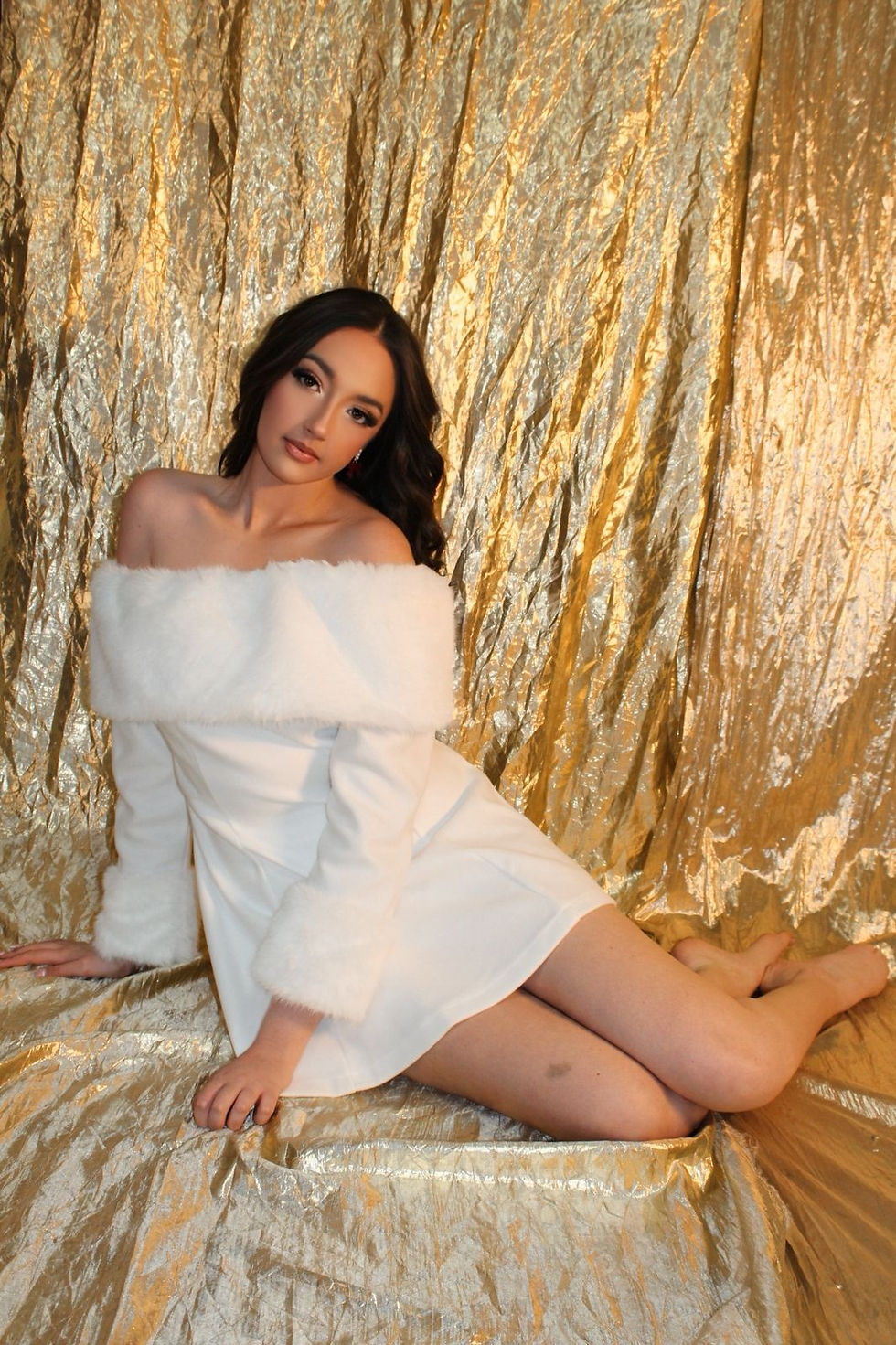
I’m also a model at Ace Models Vaal, where I train in runway, pageants, and editorial modelling.
For the past three years, I’ve been a patient voice ambassador, which means I use my lived experience to advocate for awareness, understanding, and empowerment for people living with rare diseases.

My conditions are part of my story — but they are not the whole story.
What were some of the biggest challenges you faced growing up with a rare disease?
Public school was one of the hardest seasons of my life.
I went from being a nine-year-old netball player to a Year 5 learner who wasn’t even allowed to carry her own school bag up the stairs. Being diagnosed so young was already confusing, but constantly having to explain myself made it even harder.
Teachers — especially PE teachers — often didn’t believe me when I said I couldn’t participate. Some thought I was lying, because most of the time I couldn't properly communicate my diagnoses or they simply didn't understand what I was trying to get across. Other kids didn’t understand either, or because I didn’t talk about my condition, I internalised everything. I started seeing myself as “the sick kid,” and that label stayed with me for years through other people.
Things only began to change when I moved to private school, where there was more understanding, flexibility, and compassion. That environment helped me slowly rebuild my confidence.
Today, I still live with three rare diseases — but they no longer define me. I’ve learned to use my experience as strength, to empower myself, and to advocate instead of letting it weigh me down.
Who has been your biggest source of support through it all?
My parents have been my biggest support in every sense.
My mom stood outside the MRI machine every single time, holding my foot so I wouldn’t feel alone. My dad drove countless kilometers between hospitals, doctors, and specialists without ever complaining.
Their consistency, patience, and love gave me stability when everything felt uncertain. Without them, my journey would have looked very different.
What do you wish more people understood about living with a rare disease?

I wish people understood that rare disease patients are more than their diagnoses.
Growing up, being asked questions like “What’s wrong with you?” or “Are you okay?” made me question my worth, questioning if something was infact wrong with me. For a long time, I avoided talking about my condition because I didn’t want to be seen as fragile or broken.
But living with a rare disease doesn’t mean being weak — it means being different. And different is not something to hide. People with rare diseases are resilient, capable, and full of potential. We deserve understanding, inclusion, and to be seen beyond our medical labels.
What would you say to another teenager living with a rare condition today?
I would tell them this:
Your experience is valid. Your feelings are valid.
It’s okay if it takes time to accept your diagnosis. It’s okay to struggle. But don’t let your condition convince you that you are less than anyone else.
Celebrate your rarity. Embrace what makes you different. One day, you’ll realise that the very thing you once wished away became your source of strength.
Your story matters — and it might be exactly what someone else needs to hear.
Thank you so much.


Comments