
Where There Is a Will, There Is a Way — There Is No Such Word as Can’t

A general pre‑race checkup in May 2019 turned my life upside down. I was training for my first marathon, which was meant to take place in Paris, France, and my focus was fixed on that dream run along the Champs‑Élysées. Even though I was heading towards a very fit fifty, I was feeling unusually tired, but I put it down to a frantic business acquisition, lack of time to train, inadequate sleep, and dealing with a recent death in the family. Hills were becoming harder to run, my lungs and heart felt out of sync, and my running buddies were leaving me behind. Thinking back, I realise the exhaustion had started months before, but I simply kept pushing myself forward.

By the time I finally saw a haematologist in June 2019, after administrative delays, and underwent my first biopsy later that month, the diagnosis confirmed what the doctor already suspected: full bone marrow failure, known as Severe Aplastic Anaemia. Fortunately, things moved quickly once the process began, largely because I insisted on driving everything forward. I needed to know what was happening inside my body. I felt as though I sailed through the first treatment cycle in July 2019 and was back in the office and gym within two weeks. I just kept going and even managed to run a half marathon within three months.
Then came 2020 and the arrival of Covid, which forced me into strict isolation. In February 2021, I received another devastating blow when I was diagnosed with Myelodysplastic Syndrome, complicated by a PNH clone. Chemo began immediately, along with frequent blood and platelet transfusions, but I kept going until the first serious infection set in, and my body simply could not recover on its own anymore.
In August that same year, a perfect 10/10 matched unrelated donor (MUD) was found for me. On 16 September 2021, after a week of conditioning chemo, I was reinfused with my donor’s stem cells. Nine days later, I engrafted, and on day ten I was home. Within a month I was walking around the block, within two months I had started gentle training, and four months later I was running again. However, 2022 proved to be another rollercoaster year as my body worked to adjust to all the medication. I developed Immune Thrombocytopenic Purpura (ITP) after my re‑vaccinations, and my platelets repeatedly crashed due to the immunosuppressive medication. In 2023 I suffered a massive stroke, and in 2024 I developed Hemolytic Anaemia, which meant even more needles and nine‑hour blood transfusions.
There were many moments in this journey: feeling like a human pincushion, walking into the gym with black fingertips and bruised inner elbows from blood tests, needles, and drips. These were “drugs” of a very different kind. But there were special moments too, like celebrating my fiftieth birthday with friends at a lodge in the Kruger, and receiving the steadfast care and prayers of my medical team.

When I reflect on what “equity” means in my story, several things come to mind. First, being seen, heard, and included in decisions affecting my health and recovery. I needed to be able to discuss and make joint decisions with my medical team. Second, being told the truth, always. Third, being trusted with my own healthcare once I had settled into a routine and shown that I was committed, informed, and aligned with doctor‑recommended protocols. I have been blessed with access to medical care, a haematology unit close to my home, and the convenience of online communication with my doctors. Equity also means that it is not only acceptable but essential to advocate for yourself.
In day‑to‑day life, things are mostly fair, except when medical aid decisions are made by people who have never stood in the shoes of a critically ill patient and do not understand the anxiety and PTSD involved in waiting for their approvals. Too often, they make assumptions instead of questioning a doctor’s clinical motivation or documentation.
Access to additional care or support can also become expensive, such as hiring a carer, which is often not covered. Mental health support is another area that is frequently overlooked, even though it should be a standard part of patient care, not an optional extra.
Life today feels more normal, though I still have to be careful, and we panic whenever I get sick, even if it is something minor. There is still a sense of being wrapped in cotton wool. I use my art as an educational tool to support my passions and as a way to destress and manage anxiety. One must have a creative outlet, and one must move and exercise, especially in nature, which is vital and deeply healing. My main challenges now are anxiety, PTSD, brain fog, and some memory loss caused by the many medications I take daily. My greatest advice is to be your own advocate. This is your body. You know how it feels. Your body speaks to you; listen to it.
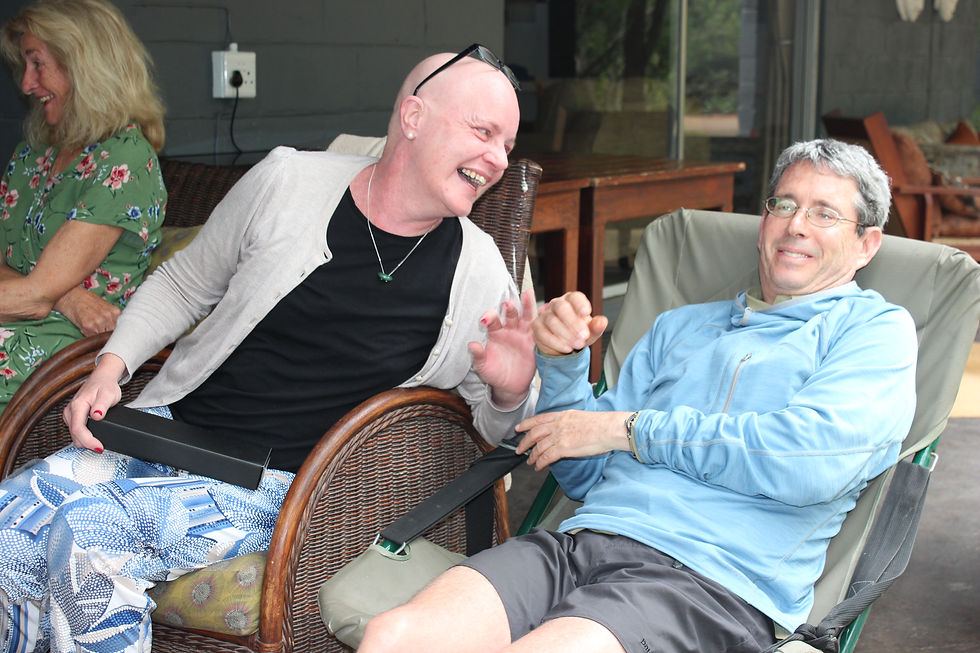
What I want others to understand about rare diseases is that I remain as active as I can. I volunteer for things that interest me, I continue my creative pursuits, and I stay in contact with my healthcare team, including regular check‑ins with my haematologist. The message is simple: we are ill, not broken. We are not ready to be discarded. We still add value and have a place in society. A little effort to create space for us, or to make small adaptations, goes a long way in supporting our health and mindset and helping us fully participate in life. You can make a difference to our mental and physical wellbeing simply by seeing us.


Comments